
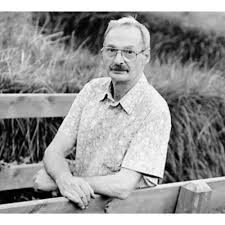
Artificial nature, participation and the relationship between art and life
Background and early years
Piero Gilardi was born in Turin in 1942 and studied at the Liceo Artistico and the Accademia Albertina. He made his debut within the climate of experimental research in Turin during the early 1960s, focusing on the relationship between art, technology and social transformation.
In 1963, he presented Macchine per il futuro (Machines for the Future), one of the first projects to reveal his interest in the interaction between art and new technological devices.
Nature-carpets (Tappeti-natura)
From 1965 onwards, he created his famous Nature-carpets (Tappeti-natura): reconstructions of meadows, undergrowth, riverbeds and other fragments of landscape made from polyurethane foam. Their realistic appearance coexists with the awareness that the nature depicted is an artificial product.
These works involve the viewer physically and anticipate reflections on the relationship between the natural environment, industry and consumer culture.
Arte Povera and Land Art
Gilardi came into contact with the artists who would go on to form the Arte Povera movement and participated in the international debate surrounding Land Art. His path remained independent, based primarily on the relationship between experience, nature and artifice.
At the end of the 1960s, he temporarily suspended his artistic production to dedicate himself to political and social activism, developing a strong interest in collective and participatory practices.
The return to art and interactivity
In the 1980s, Gilardi returned to artistic research, concentrating on the possibilities offered by digital technologies and audience participation. He created interactive environments and installations in which the viewer becomes an integral part of the work.
This phase led to a conception of art as a shared experience, capable of connecting the body, technology, the environment and the community.
The PAV and the relationship with nature
Since 2002, Gilardi worked on the design of the PAV – Parco Arte Vivente (Living Art Park) in Turin, which opened in 2008 as an experimental centre dedicated to the relationship between art, nature and the environment.
The PAV represents the synthesis of many aspects of his research: art is conceived as experience, relationship and process, rather than the mere production of objects.
Critical analysis
Gilardi’s research spans several fundamental transformations in contemporary art: from Post-Pop Art to Arte Povera, and from Land Art to interactive and technological art.
His most original contribution lies in his use of artifice to question the meaning of nature and, subsequently, his use of technology to build new forms of participation.