
The paradox of matter: marble, wood and combustion
Education
Valeria Vaccaro was born in Turin in 1988 and studied sculpture at the Albertina Academy of Fine Arts in her home city, following her studies at artistic high school. Her research has established itself through a recognisable sculptural practice based on the relationship between materials and appearances. Her works often appear to be made of burnt, worn or charred wood, but are actually carved from marble—a material associated with durability, classicism and permanence. This contradiction constitutes the poetic core of her work.
A deceptive realism
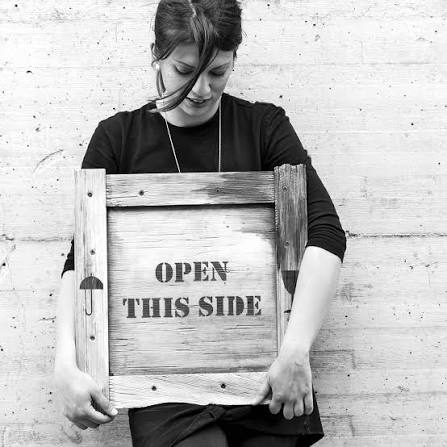
Vaccaro frequently starts with common objects: crates, pallets, planks, boxes and other elements related to the production and transport of goods. These are functional forms, normally destined to be ignored or discarded once their use is exhausted. The artist reconstructs them in marble with a precision that renders grain, cracks, burns and signs of wear. The viewer initially recognises a poor and familiar material; upon closer inspection, they instead discover the solidity and coldness of stone. The sculpture thus acts as a perceptual device that challenges the first impression.
Fire as transformation
Combustion is a recurring theme and should be understood as more than just a visual effect. Fire destroys, consumes and modifies matter, but it also leaves a trace that can be observed as evidence of a process. Vaccaro freezes a moment of transformation in marble: the wood seems still to be smouldering or to have just finished burning, while the stone makes permanent an event that is normally transitory. The work relates durability and impermanence, ruin and regeneration, loss and the reassignment of value.
Technique and contrasts
The illusionistic quality of the surfaces requires meticulous carving and finishing. The marble is not hidden behind an abstract form, but used to imitate a material that is almost its opposite in terms of temperature, weight and cultural associations. The noble material presents itself as industrial residue; the humble object acquires the dignity of a work of art; what appears fragile becomes resistant. This system of oppositions makes the sculpture readable on multiple levels: as technical virtuosity, as a perceptual game and as a reflection on the value that society attributes to things.
Exhibition history and awards
Vaccaro has exhibited regularly since 2005 in solo and group exhibitions in Italy and abroad. Milestones in her career include participation in the European travelling biennial JCE – Jeune Création Européenne between 2013 and 2015, an exhibition at the Museum of Contemporary Art of the Castello di Rivara in 2015 and the selection of sculptures for BAG Bocconi Art Gallery in 2021. In 2017, she received a special mention from the City of Turin as part of the CBM Art Prize and was among the winners of the ArTeam Cup; in 2022, she was awarded second prize by the VAF Foundation.
Critical interpretation
Vaccaro’s work sits between the tradition of realistic sculpture and a contemporary conceptual sensibility. Technical skill is not an end in itself: it serves to produce a discrepancy between what we see and what we know. The sculpture makes visible the power of material conventions—marble as eternity, burnt wood as waste—and shows how such meanings are culturally constructed. The ordinary object, transferred into an unexpected material, evades its function and becomes an occasion for contemplation. In this transformation, paradox, the memory of consumption and a reflection on art’s ability to restore value to what is discarded meet.