
Wood sculpture between Alpine tradition and contemporary imagination
Origins and training
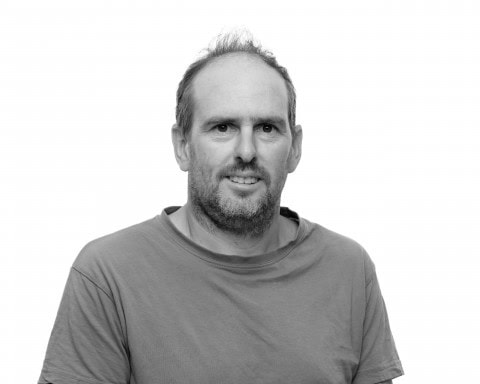
Ivan Lardschneider was born in Bolzano on 16 January 1976 and grew up in an Alpine setting where wood represents a daily presence, a construction material and a craft resource, but also an element deeply linked to the landscape. He studied at the Selva di Val Gardena art school and obtained the professional qualification of sculptor. Since 2005, he has worked as an independent sculptor. His training is rooted in a local tradition of woodcarving and woodworking, which the artist reinterprets through a personal and contemporary imagery.
Wood as a living material
The choice of wood is not merely technical. The material retains grain, knots, variations in hardness and traces of the tree’s growth; each piece possesses characteristics that influence the final result. Lardschneider works with these peculiarities, transforming wood into figures and objects that seem to possess a psychological presence. The material is not treated as a neutral support: it participates in the form and suggests possibilities that the sculptor develops through cutting, carving and finishing.
Figures, emotions and irony
His repertoire includes human figures, animals, fantastic creatures and subjects related to daily life. Proportions may be deliberately altered, faces accentuated and gestures made expressive. In some works, an ironic or grotesque tone emerges; in others, tenderness, melancholy or an almost fairytale dimension prevail. Sculpture does not always aim for academic naturalism: deformation becomes a tool to make visible moods and contradictions. The apparent immediacy of the figures is supported by a concrete knowledge of the material and remarkable craftsmanship.
Tradition and contemporary language
Alpine wood sculpture has a long history, associated with decoration, religious devotion and everyday objects. Lardschneider is familiar with this background, but does not limit himself to repeating its models. His figures can be autonomous, provocative or playful, designed for a contemporary audience and for the exhibition context. The artist uses the familiarity of the material to create a direct relationship with the viewer, but introduces elements of estrangement that prevent the works from being considered simple exercises in manual skill.
Exhibition history
His first major appearance is linked to the “Micurà de Rü” Ladin Museum and the Ladin Triennial. Subsequently, he has collaborated with galleries in various European cities, including Paris, Saint-Paul-de-Vence, Rome, Milan, Turin and Berlin. His works were also presented in contexts related to the Venice Biennale in 2011 and 2017, according to the artist’s biography. He has also participated in competitions for public interventions and artistic projects, confirming his interest in the relationship between sculpture, architecture and shared space.
A poetics of presence
The strength of Lardschneider’s work derives from the encounter between a recognisable natural material and figures that seem to emerge from an inner world. The wood preserves the memory of the tree, while the carving transforms it into a character, gesture or symbol. Sculpture thus becomes a meeting point between landscape and imagination, tradition and expressive freedom. The artist demonstrates that manual knowledge rooted in a territory can generate a personal language, capable of speaking to an international audience without losing the link with its origins.